
11 How To Write Your Wedding Vows Without Sounding Generic
How to Write Your Wedding Vows Without Sounding Generic
Personal vows sound genuine when they use your normal voice, specific memories, and promises you can actually imagine keeping.
Personal vows are one of the few parts of a wedding ceremony that are entirely in your own voice. A little structure helps you prepare without making the words feel scripted, and a dedicated vow book gives those words a physical place to live after the ceremony.
This guide focuses on how to write wedding vows from a practical planning perspective. The goal is not to follow a rule for its own sake, but to choose an approach that fits your guest count, wedding style, and the way you hope to remember the day afterward.
Start with notes, not polished sentences
Write down memories, traits you admire, hard moments you handled together, and the future you picture. Do not worry about making the list poetic.
Consistency also helps. Repeating one or two decisions—such as typography, personalization style, or a simple color family—creates cohesion without requiring every wedding piece to match exactly.
Choose one central idea
Your vows might center on partnership, adventure, home, faithfulness, laughter, or choosing each other through change. A clear theme prevents the speech from becoming a biography of your relationship.
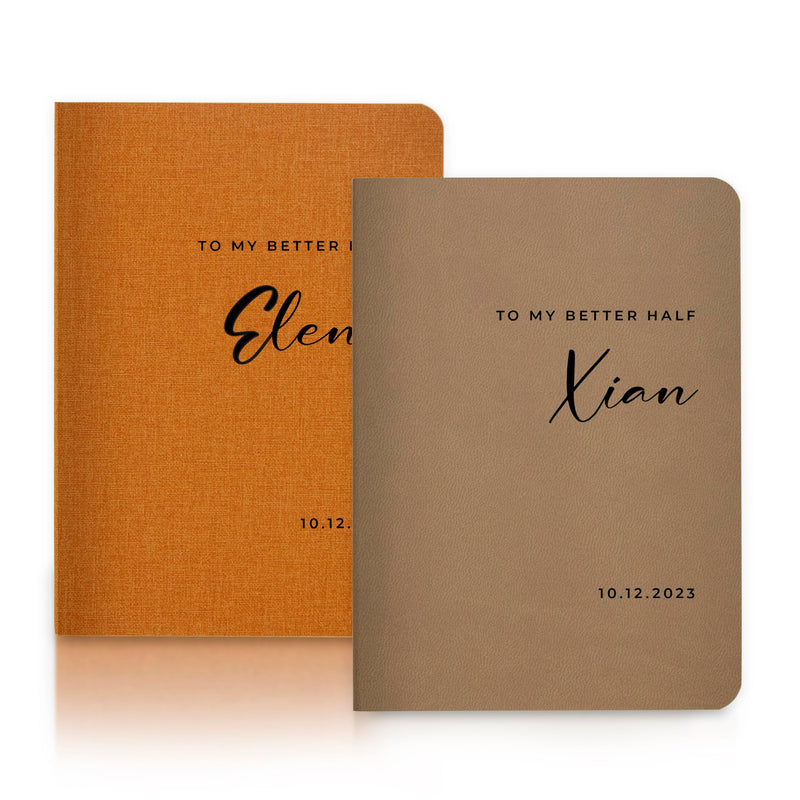
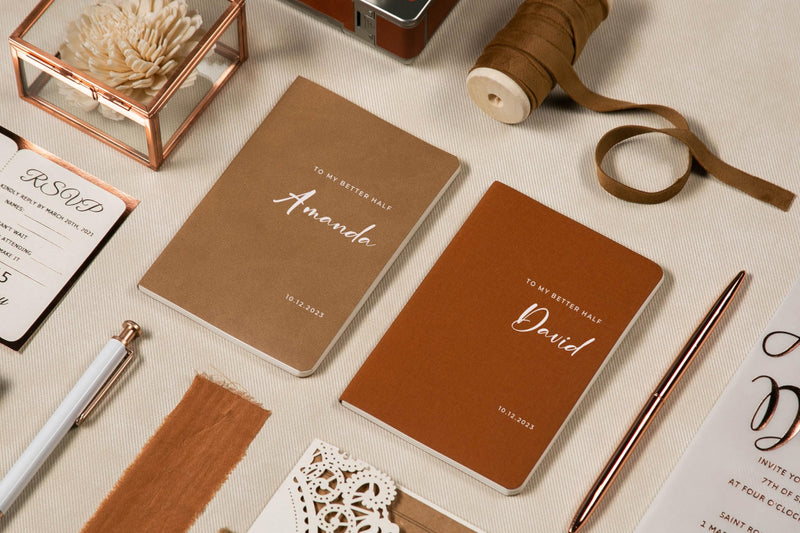
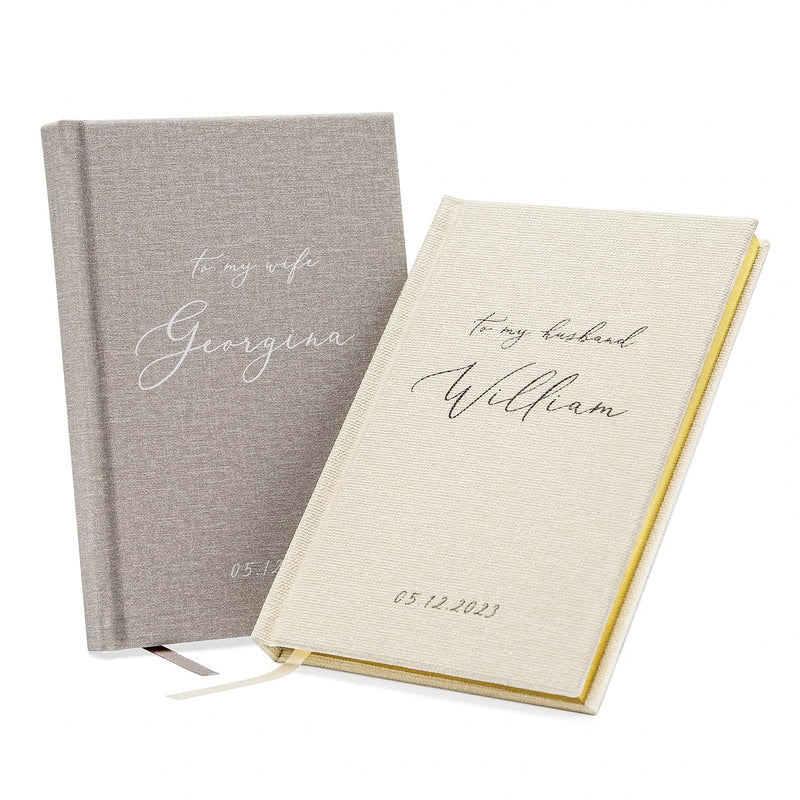
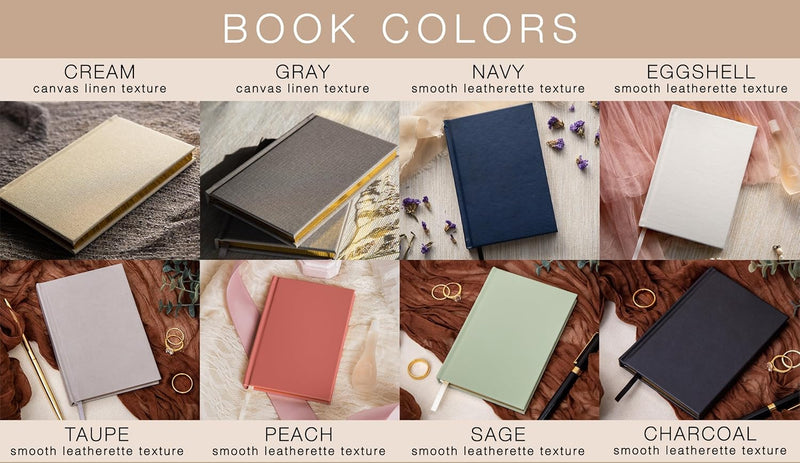
If you would like to read your final promises from a keepsake rather than a phone, consider personalized soft-cover vow books and personalized hardcover vow books
Think through this choice from the user’s point of view. What feels obvious while you are planning may be less obvious to a guest encountering it for the first time in a busy room. Clear visual cues and a straightforward setup usually matter more than adding another decorative detail.
Include specific details
“You make ordinary Tuesday nights feel fun” sounds more personal than “you are my best friend.” Specific images make familiar sentiments feel like your own.
Build in a little extra capacity. Weddings rarely unfold with perfect efficiency, so spare space, backup supplies, and a flexible layout can prevent a small planning assumption from becoming an event-day problem.
Write real promises
Mix emotional promises with everyday ones: to communicate, show up, make room for each other’s goals, keep learning, apologize, celebrate, or protect time together.
Before committing, make a quick mock-up with the real dimensions or supplies. A five-minute test can reveal whether there is enough writing room, whether the wording is readable, or whether the item will feel awkward once other wedding details are placed around it.
Read the vows aloud and trim
Spoken language is different from written language. Shorten sentences that feel formal, remove repeated ideas, and mark places where you naturally want to pause.
Try not to solve a functional problem with decoration. First make the item easy to use and understand; then add the styling choices that make it feel personal to the couple.
Write for speaking, not for reading silently
Ceremony words should be comfortable to say aloud. Use short sentences, natural pauses, and vocabulary you would actually use with your partner.
Keep the decision simple by identifying the one outcome that matters most, then remove anything that does not support it. Wedding details are easier to execute when each item has a clear job.
Treat the physical book as part of the ceremony
Vow books appear in close-up photographs and are handled when emotions are high. Legible text, comfortable page turns, and a design that fits the ceremony matter more than decorative complexity.
Keep the decision simple by identifying the one outcome that matters most, then remove anything that does not support it. Wedding details are easier to execute when each item has a clear job.
A practical checklist before you decide
- Agree with your partner on approximate vow length and tone.
- Read the final vows aloud at least once.
- Use large, legible handwriting or print size.
- Mark page turns so you do not lose your place.
- Place the books with the rings or ceremony essentials before the processional.
Common mistakes to avoid
Avoid copying language that does not sound like you, writing so small that you cannot read while emotional, surprising your partner with a dramatically different vow length, or waiting until the wedding morning to make the only copy.
Frequently asked questions
How do I make wedding vows sound personal?
Use details only the two of you would recognize, then connect those memories to specific promises about your marriage.
Can wedding vows be funny?
Yes. A small amount of humor can make vows sound natural, as long as it does not embarrass your partner or turn the ceremony into a comedy routine.
Should I memorize my vows?
You do not need to. A vow book keeps the words close at hand and removes the pressure of perfect memorization.
Make it part of the story, not just another wedding detail
MUUJEE creates personalized wedding gifts and wood memory boxes designed to preserve the physical pieces that tell a couple’s story. A keepsake works best when the personalization is meaningful and the item has a clear purpose after the wedding.
Explore personalized wedding gifts, wood memory boxes, ring boxes, and keepsakes at MUUJEE.
How to make the final choice with confidence
When two options both seem reasonable, choose the one that reduces friction on the wedding day and still feels useful afterward. Weddings contain many small decisions, so the most durable choice is often the one that is easy to explain, easy to use, and easy to store. Imagine the item at three moments: during setup, while guests or the couple are actively using it, and one year after the wedding. If it works in all three situations, it is probably a strong choice.
It also helps to separate “must have” features from “nice to have” features. Must-have features affect function: enough writing space, readable wording, accurate personalization, appropriate size, or practical storage. Nice-to-have features affect styling: a particular ribbon, decorative phrase, or accent. Make the functional decision first, then use design details to make the piece feel personal.
Finally, leave a little margin for real life. Guests write larger than expected, timelines run late, tables get moved, and keepsakes accumulate. Extra space, simple instructions, and a flexible format are rarely wasted.